

Decentralized finance has become one of the most active segments of the crypto ecosystem, enabling users to swap tokens, lend and borrow assets, interact with smart contracts, trade NFTs, and participate in Web3 applications without intermediaries.
This page focuses on the Best DeFi Wallets in 2026, specifically designed for users who actively interact with decentralized applications and smart contracts.
Rather than covering beginner-friendly wallets or purely security-focused setups, this ranking highlights the Best Wallets for DeFi based on real-world usage, protocol compatibility, and on-chain interaction quality.
Best DeFi Wallets Ranking (2026)
The wallets listed below are those that best fit our DeFi-focused scoring system. While some hardware wallets such as Ledger, Keystone, or Trezor also provide native applications, we generally recommend using them in combination with the software wallets listed here. This approach offers a better balance between usability and security for most DeFi 1 workflows.
Best DeFi Wallets comparison table
| Rank | Wallet | DeFi score ( /100 ) | Supported blockchains | Best for |
|---|---|---|---|---|
| 1 | Rabby Wallet | 90 | Ethereum, EVM chains | Advanced DeFi & smart contracts |
| 2 | MetaMask | 88 | Ethereum, EVM chains | Universal Ethereum DeFi |
| 3 | Phantom | 87 | Solana, Ethereum | Solana DeFi & NFTs |
| 4 | OKX Wallet | 85 | Ethereum, Solana, multi-chain | Cross-chain DeFi |
| 5 | Frame | 84 | Ethereum, EVM chains | Secure desktop DeFi |
| 6 | Backpack | 84 | Solana | Advanced Solana DeFi |
| 7 | Rainbow | 83 | Ethereum, EVM chains | Everyday DeFi usage |
| 8 | Solflare | 82 | Solana | Solana staking & DeFi |
| 9 | Coinbase Wallet | 82 | Ethereum, Solana, multi-chain | Multi-chain DeFi |
| 10 | Trust Wallet | 81 | Ethereum, Solana, multi-chain | Broad DeFi exploration |
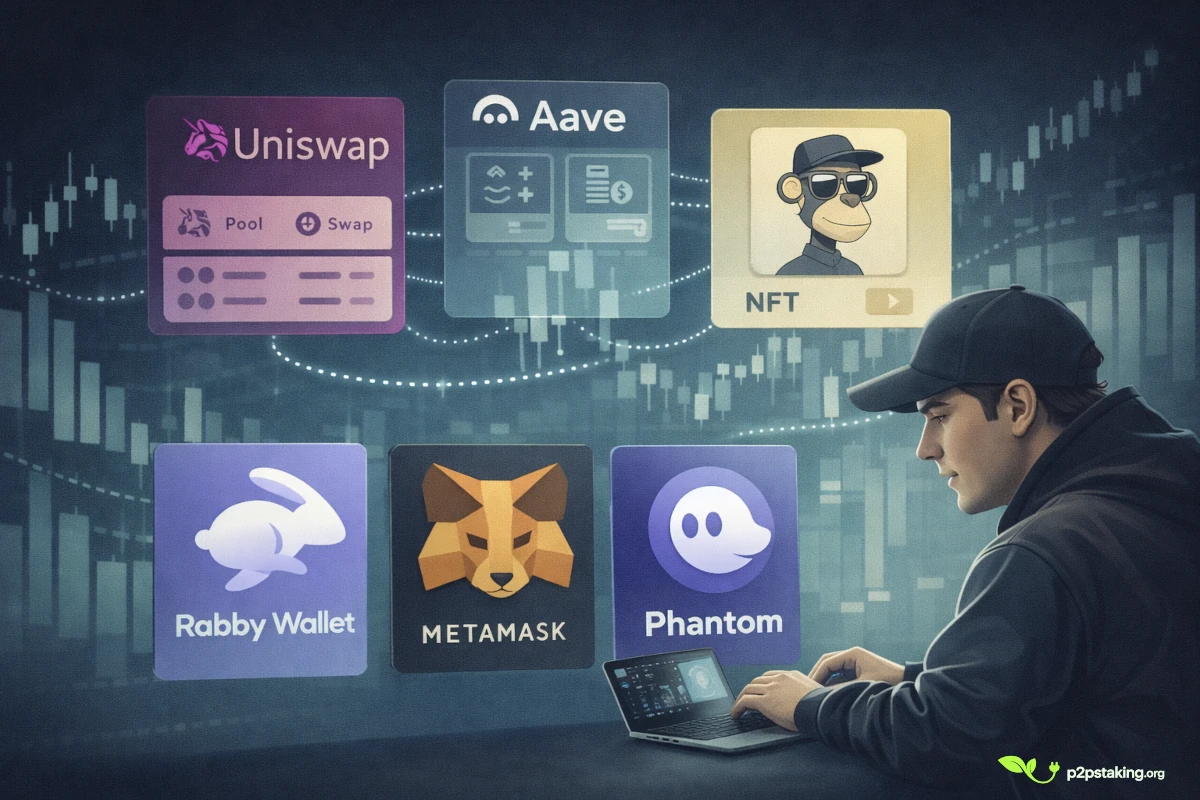
What Is a DeFi Wallet?
A DeFi wallet is a non-custodial crypto wallet that allows users to interact directly with decentralized applications and smart contracts. Unlike custodial wallets or centralized exchanges, DeFi wallets give users full control over their private keys and on-chain activity.
The best wallets for smart sontracts enable users to sign transactions, approve token spending, interact with DeFi protocols, and connect to dApps without relying on intermediaries. These wallets act as the primary interface between users and blockchains such as Ethereum and Solana.
Should You Use a Hardware Wallet for DeFi?
Using a hardware wallet for DeFi adds an important layer of security by keeping private keys isolated from internet-connected devices.
When combined with a software wallet, a hardware wallet allows users to sign smart contract interactions while ensuring that assets remain protected, even if the connected device is compromised.
However, DeFi interactions often involve multiple steps, including token approvals, contract calls, and complex transactions. Depending on the protocol and the type of interaction, using a hardware wallet can require multiple confirmation steps, sometimes with limited transaction readability on the device itself. This can slow down workflows for users who interact frequently with DeFi protocols.
Using a hardware wallet for DeFi is therefore a trade-off between security and efficiency.
For long-term positions, high-value transactions, or infrequent interactions, hardware wallets provide strong protection.
For users who interact daily with smart contracts, some may prefer the speed of a software wallet, or a hybrid approach where only specific assets are secured with a hardware device.
Hardware wallet compatibility overview
| Software wallet | Ledger | Trezor | Keystone | BitBox |
|---|---|---|---|---|
| Rabby | ✅ | ✅ | ✅ | ✅ |
| MetaMask | ✅ | ✅ | ✅ | ✅ |
| Phantom | ✅ | ⚠️ | ✅ | ❌ |
| OKX Wallet | ✅ | ✅ | ✅ | ⚠️ |
| Frame | ✅ | ✅ | ✅ | ✅ |
| Backpack | ✅ | ⚠️ | ✅ | ❌ |
| Rainbow | ✅ | ✅ | ✅ | ⚠️ |
| Solflare | ✅ | ⚠️ | ✅ | ❌ |
| Coinbase Wallet | ✅ | ✅ | ⚠️ | ⚠️ |
| Trust Wallet | ✅ | ✅ | ⚠️ | ⚠️ |
⚠️ Partial support — Supported via WalletConnect, QR signing, or third-party bridges. Functionality may vary depending on the protocol, platform, or type of transaction.
DeFi Wallet Overview
Rabby Wallet overview
Overall DeFi score: 90 / 100
Main blockchains: Ethereum, EVM-compatible chains
Platforms: Browser extension
Hardware wallet compatibility: Yes (Ledger, Trezor, Keystone, BitBox)
Wallet type: Non-custodial
Launch year: 2021
Rabby Wallet is built specifically for advanced DeFi usage and frequent smart contract interactions. Unlike general-purpose wallets, it focuses on helping users understand exactly what they are signing by simulating transactions, decoding contract calls, and displaying clear warnings for risky approvals.
Its strong multi-chain awareness makes it particularly effective for users interacting with multiple EVM networks. Rabby automatically detects the correct chain for each dApp, reducing common user errors during DeFi interactions. Hardware wallet integration further strengthens its appeal for users managing significant on-chain exposure.
Rather than optimizing for simplicity, Rabby prioritizes transaction transparency and risk awareness, making it one of the best wallets for smart contracts.
| Pros | Cons |
|---|---|
| Advanced transaction simulation | Browser-only |
| Clear approval and risk warnings | Less beginner-friendly |
| Strong multi-chain support | |
| Broad hardware wallet compatibility |
Best suited for
Power users with heavy DeFi and smart contract activity across EVM chains.
MetaMask overview
Overall DeFi score: 88 / 100
Main blockchains: Ethereum, EVM-compatible chains
Platforms: Browser, iOS, Android
Hardware wallet compatibility: Yes (Ledger, Trezor, Keystone)
Wallet type: Non-custodial
Launch year: 2016
MetaMask is one of the most widely used DeFi wallets and remains a reference point for interacting with Ethereum-based decentralized applications. Its strength lies in near-universal compatibility with DeFi protocols, Layer 2 networks, NFT platforms, and Web3 tools.
The wallet supports custom networks, manual gas configuration, and WalletConnect, making it adaptable to a wide range of DeFi workflows. While MetaMask does not natively offer advanced transaction simulation, pairing it with a hardware wallet significantly improves security for smart contract interactions.
MetaMask is best described as a universal gateway to DeFi, especially for Ethereum and Layer 2 ecosystems.
| Pros | Cons |
|---|---|
| Unmatched dApp compatibility | Limited native transaction analysis |
| Strong ecosystem support | Browser attack surface |
| Hardware wallet integration |
Best suited for
Ethereum and Layer 2 users seeking maximum DeFi compatibility.
Phantom overview
Overall DeFi score: 87 / 100
Main blockchains: Solana, Ethereum
Platforms: Browser, iOS, Android
Hardware wallet compatibility: Yes (Ledger, Keystone)
Wallet type: Non-custodial
Launch year: 2021
Phantom is widely regarded as the leading wallet for Solana DeFi and NFTs. It offers a smooth and intuitive interface for interacting with Solana-based DEXs, lending protocols, NFT marketplaces, and Web3 applications.
The wallet integrates staking, token management, and dApp connections directly into the interface, reducing friction for frequent on-chain activity. Phantom also supports Ethereum, though its core strength remains the Solana ecosystem.
For users active in Solana DeFi, Phantom provides one of the most polished and reliable experiences available.
| Pros | Cons |
|---|---|
| Excellent Solana DeFi support | Limited EVM features |
| Clean and intuitive UX | |
| Hardware wallet support |
Best suited for
Solana-focused DeFi and NFT users.
OKX Wallet overview
Overall DeFi score: 85 / 100
Main blockchains: Ethereum, Solana, multi-chain
Platforms: Browser, iOS, Android
Hardware wallet compatibility: Yes (Ledger, Trezor, Keystone)
Wallet type: Non-custodial
Launch year: 2022
OKX Wallet is a multi-chain DeFi wallet designed to provide access to a broad range of ecosystems from a single interface. It integrates a built-in dApp browser and supports numerous blockchains, making it suitable for cross-chain DeFi activity.
The wallet offers convenience and breadth rather than specialization. While it lacks some of the advanced transaction analysis found in DeFi-first wallets, it remains effective for users interacting across many protocols and chains.
| Pros | Cons |
|---|---|
| Wide multi-chain support | All-in-one UX can feel heavy |
| Built-in dApp access | Less specialized for smart contracts |
| Hardware wallet compatibility |
Best suited for
Users active across multiple DeFi ecosystems.
Frame overview
Overall DeFi score: 84 / 100
Main blockchains: Ethereum, EVM-compatible chains
Platforms: Windows, macOS, Linux
Hardware wallet compatibility: Yes (Ledger, Trezor, Keystone, BitBox)
Wallet type: Non-custodial
Launch year: 2018
Frame is a desktop-first wallet designed for secure and transparent DeFi transaction signing. It emphasizes hardware wallet workflows and explicit transaction review, reducing reliance on browser extensions.
Frame is particularly appealing to users who prefer a controlled desktop environment for interacting with smart contracts. Its architecture favors clarity and security over convenience, making it suitable for advanced DeFi setups.
| Pros | Cons |
|---|---|
| Excellent hardware wallet workflows | Desktop-only |
| Clear transaction signing | Smaller dApp ecosystem |
Best suited for
Security-conscious DeFi users on desktop.
Backpack overview
Overall DeFi score: 84 / 100
Main blockchains: Solana
Platforms: Browser, iOS, Android
Hardware wallet compatibility: Yes (Ledger, Keystone)
Wallet type: Non-custodial
Launch year: 2022
Backpack is a modern Solana wallet designed around DeFi, NFTs, and programmable xNFT applications. It supports advanced Solana-native workflows and integrates deeply with newer protocols.
Its focus on extensibility and composability makes it attractive for users exploring the cutting edge of the Solana ecosystem.
| Pros | Cons |
|---|---|
| Strong Solana-native DeFi focus | Solana-only |
| Modern architecture | |
| Hardware wallet support |
Best suited for
Advanced Solana DeFi and xNFT users.
Rainbow overview
Overall DeFi score: 83 / 100
Main blockchains: Ethereum, EVM-compatible chains
Platforms: Mobile, browser
Hardware wallet compatibility: Yes (Ledger, Trezor, Keystone)
Wallet type: Non-custodial
Launch year: 2019
Rainbow focuses on delivering a polished and accessible Ethereum DeFi experience. It simplifies token management, swaps, and NFT interactions while maintaining compatibility with major DeFi protocols.
While it lacks some advanced DeFi controls, Rainbow performs well for regular Ethereum-based DeFi usage.
Best suited for
Users seeking a clean and approachable Ethereum DeFi wallet.
Solflare overview
Overall DeFi score: 82 / 100
Main blockchains: Solana
Platforms: Browser, iOS, Android
Hardware wallet compatibility: Yes (Ledger, Keystone)
Wallet type: Non-custodial
Launch year: 2020
Solflare is a long-standing Solana wallet with strong support for DeFi, staking, and governance. It offers advanced Solana features and hardware wallet integration.
Best suited for
Solana users focused on staking and governance-heavy DeFi.
Coinbase Wallet overview
Overall DeFi score: 82 / 100
Main blockchains: Ethereum, Solana, multi-chain
Platforms: Browser, iOS, Android
Hardware wallet compatibility: Yes (Ledger, Trezor)
Wallet type: Non-custodial
Launch year: 2018
Coinbase Wallet provides broad DeFi access with a user-friendly interface. It is less specialized but effective for users managing DeFi across multiple chains.
Best suited for
Users seeking simple multi-chain DeFi access.
Trust Wallet overview
Overall DeFi score: 81 / 100
Main blockchains: Ethereum, Solana, multi-chain
Platforms: iOS, Android
Hardware wallet compatibility: Yes (Ledger, Trezor)
Wallet type: Non-custodial
Launch year: 2017
Trust Wallet supports a wide range of blockchains and tokens, making it suitable for broad DeFi exploration rather than advanced smart contract workflows.
Best suited for
Users exploring DeFi across many ecosystems.
DeFi Wallet Ranking Methodology
Our ranking of the best DeFi wallets is based on real-world usage rather than marketing claims.
DeFi compatibility & smart contract support – 30 points
This category evaluates how well a wallet supports real-world DeFi interactions.
We assess compatibility with smart contracts, DEXs, lending protocols, NFT platforms, and Web3 games. Wallets that natively support WalletConnect, popular DeFi standards, and complex contract interactions score higher. Smooth handling of approvals, contract calls, and multi-step transactions is essential.
Multi-chain & Layer 2 support – 20 points
DeFi is no longer single-chain.
We evaluate support for major DeFi ecosystems such as Ethereum, EVM-compatible chains, and Layer 2 networks. Wallets that allow seamless switching between chains, clear network identification, and reliable cross-chain interactions receive higher scores.
DeFi user experience & transaction clarity – 15 points
DeFi usage increases the risk of costly mistakes.
This category focuses on transaction readability, clear display of smart contract actions, token approvals, gas fees, and risks associated with each transaction. Wallets that help users understand what they are signing score higher.
Security for DeFi usage – 15 points
Security remains essential, but evaluated specifically for DeFi.
We look at protections against malicious contracts, unlimited approvals, phishing attempts, and unsafe dApp connections. Hardware wallet compatibility for DeFi interactions and safe signing workflows are also considered.
dApp ecosystem & integrations – 10 points
A strong DeFi wallet acts as a gateway to the ecosystem.
We evaluate native dApp browsers, curated dApp lists, integrations with major DeFi protocols, NFT marketplaces, and DeFi dashboards. Wallets that reduce friction between the user and DeFi protocols score higher.
Advanced DeFi features – 10 points
This category rewards power-user capabilities.
We assess support for features such as custom RPCs, manual gas control, token management, staking, restaking, DAO participation, and advanced permission management. Wallets that give users fine-grained control over their DeFi activity score higher.
Are DeFi Wallets Safe?
DeFi wallets are safe when used properly, but risks remain. Smart contract vulnerabilities, phishing attacks, and user errors are common in decentralized finance. Using wallets with strong transaction clarity, approval management, and hardware wallet support significantly reduces these risks.
Final Thoughts
The best DeFi wallet depends on how often you interact with smart contracts, which blockchains you use, and how much complexity you are willing to manage. The wallets listed here represent the strongest options for active DeFi users in 2026.
Ready to Take Control of Your Crypto?
Go deeper into self‑custody, software wallets, hardware wallets, and practical guides.

Java‑certified engineer and P2PStaking CEO, I secure validators across Solana, Polkadot, Kusama, Mina, and Near. My articles reflect hands‑on wallet ops and real recovery drills so you can set up self‑custody safely, step by step.
DeFi Wallets FAQ
Which is the best DeFi wallet?
The best DeFi wallet depends on your usage, but Rabby Wallet ranks highest overall for advanced DeFi and smart contract interactions, followed closely by MetaMask for Ethereum-based DeFi and Phantom for Solana DeFi.
What is the best wallet for smart contracts?
Rabby Wallet and MetaMask are among the best wallets for smart contracts, offering strong compatibility with DeFi protocols, clear transaction signing, and broad ecosystem support.
Are DeFi wallets safe to use?
DeFi wallets are safe when used properly, but risks remain due to smart contract vulnerabilities, phishing, and user error. Wallets with transaction simulation, approval management, and hardware wallet support significantly reduce these risks.
Should I use a hardware wallet for DeFi?
Using a hardware wallet for DeFi improves security by keeping private keys offline, but it can reduce speed and convenience due to multiple confirmation steps. Many users adopt a hybrid approach depending on transaction frequency.
Do I need a different wallet for Ethereum and Solana DeFi?
Some wallets support both ecosystems, but many users prefer specialized wallets: MetaMask or Rabby for Ethereum DeFi, and Phantom or Solflare for Solana DeFi.
What are the best wallets for DeFi beginners?
This ranking focuses on advanced DeFi usage. Beginners may prefer simpler wallets with guided interfaces rather than DeFi-first tools.
Footnotes
1: If you’re wondering what the DeFi ecosystem is made of in practice, DeFiLlama is a reliable resource for exploring active protocols and ongoing projects across multiple blockchains.
