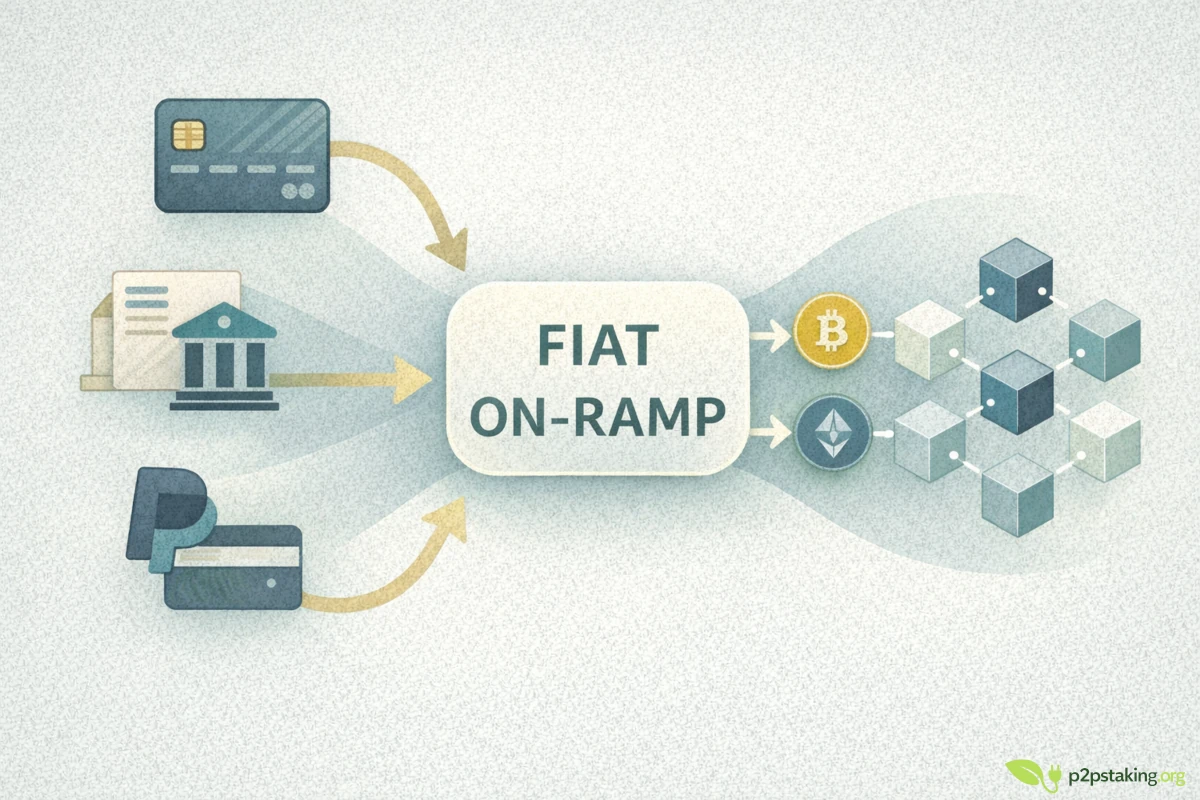
A fiat to crypto on-ramp is a service that allows you to buy cryptocurrency using traditional money such as USD, EUR, or GBP. It acts as a bridge between the traditional financial system and the blockchain ecosystem.
“Fiat” refers to government-issued currency. An “on-ramp” simply means a point of entry. In practice, this is how most investors first access digital assets before thinking about allocation, execution structure, or long-term positioning.
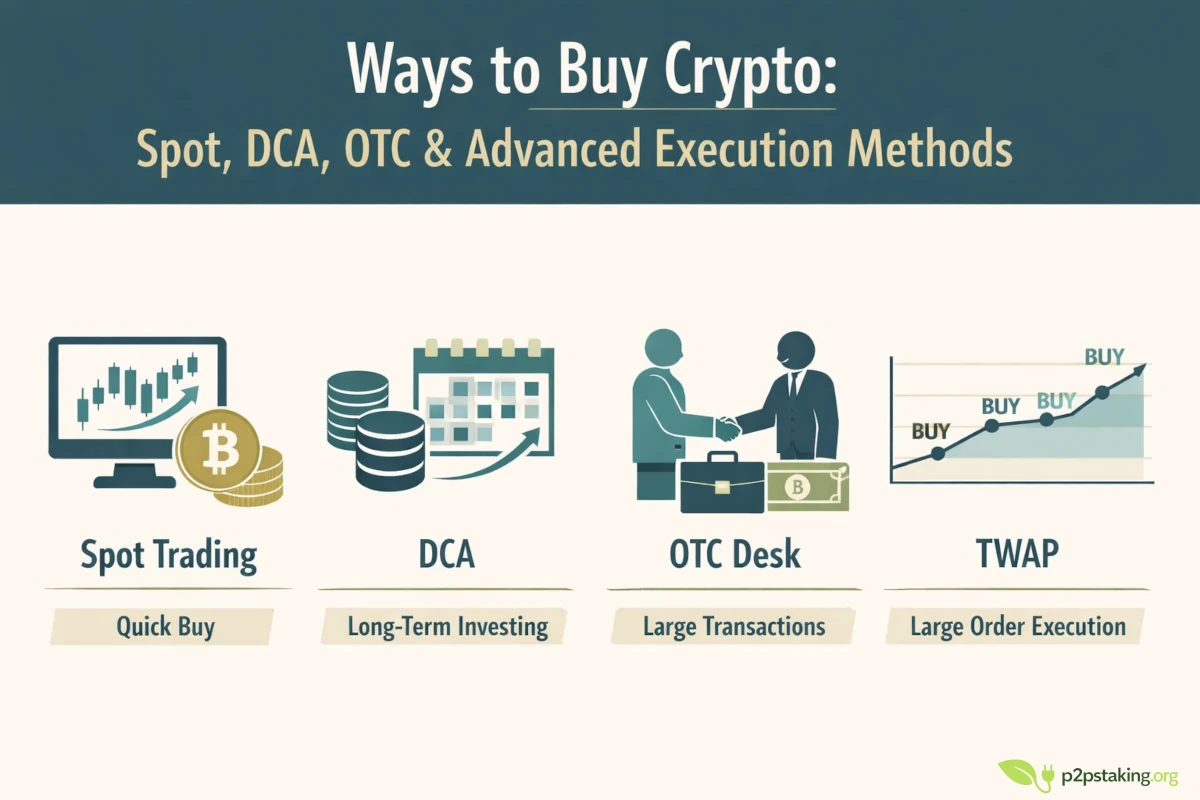
If you are new to digital assets, this is typically the starting point before trading, accumulating, or holding crypto. However, a fiat on-ramp is only one part of the broader acquisition process. Once capital has entered the ecosystem, investors still need to decide how that capital should be deployed — whether through spot purchases, dollar-cost averaging, structured execution, or other methods.
To understand how these approaches differ, explore the full overview of ways to buy crypto.
How Does a Fiat to Crypto On-Ramp Work?
The process of crypto on-ramping is designed to be simple, especially for beginners.
First, you select the cryptocurrency you want to purchase, such as Bitcoin or Ethereum. Then you choose a payment method — bank transfer, debit card, or another supported option. Once the payment is processed, the crypto is delivered either to your exchange account or directly to your wallet.
In many cases, identity verification (KYC) is required. However, this typically applies once you reach certain transaction thresholds. For very small amounts, some providers allow limited purchases without full verification, depending on local regulations.
The reason identity checks are often required has to do with how fiat money works. Traditional payment systems — banks, card networks, payment processors — operate through centralized intermediaries. These systems must comply with financial regulations, including anti-money laundering (AML) rules.
Blockchain networks, by contrast, are decentralized. Anyone can create a wallet without providing identification. When you move from a centralized fiat system into a decentralized crypto system, service providers act as regulated bridges between the two models. Exchanges and on-ramp providers must verify users because they are converting funds from a regulated financial environment into digital assets.
Even when a fiat to crypto on-ramp is integrated inside a self-custody wallet, the fiat conversion itself is always handled by a third-party provider. The wallet simply connects you to that service. The payment and compliance process still goes through an external regulated intermediary.
Payment Methods for Crypto On-Ramping
Different fiat to crypto on-ramps offer different payment options.
Bank transfers (such as SEPA 1 or ACH 2) are usually the most cost-effective method, especially for larger amounts. However, they may take one to several business days to settle.
Debit or credit cards provide faster access to crypto, often within minutes, but typically involve higher processing fees. Some platforms also support mobile payment solutions or regional payment systems.
For beginners, the main trade-off is speed versus cost.
Where Can You Use a Fiat to Crypto On-Ramp?
You can access a fiat to crypto on-ramp in several environments.
Most centralized exchanges provide built-in on-ramping services. You deposit fiat and convert it into crypto within your account.
Some wallets — including self-custody wallets — integrate crypto on-ramping directly into their interface. In this case, you purchase crypto inside the wallet, but the actual fiat transaction is processed by an external provider.
No matter the interface, a fiat to crypto on-ramp always involves a third party handling the fiat payment and regulatory compliance.
When Should You Use a Fiat to Crypto On-Ramp?
A fiat to crypto on-ramp is ideal if you are buying crypto for the first time.
It is also suitable if you want a straightforward way to convert traditional currency into digital assets without learning advanced trading tools.
For usual investments and long-term holdings, on-ramping provides a simple and familiar experience. For very large allocations, corporate treasury movements, or institutional purchases, alternative methods such as OTC desks may be more appropriate.
Fiat to Crypto On-Ramp vs Spot Trading
It is important not to confuse fiat on-ramping with spot trading.
A fiat to crypto on-ramp focuses on converting traditional currency into crypto assets.
Spot trading generally refers to exchanging one asset for another at the current market price. This often means trading crypto against crypto, such as ETH for BTC or BTC for USDT.
However, spot trading can also involve fiat pairs. On many exchanges, you can buy Bitcoin directly with USD and sell it back into USD. In that case, you are still using the spot market.
The key difference is that on-ramping is about entering the crypto ecosystem from fiat. Spot trading is about exchanging assets within the market, whether crypto-to-crypto or fiat-to-crypto through an exchange order book.
For beginners, the fiat to crypto on-ramp is often the first step before engaging in spot trading.
Fees and Limits in Fiat to Crypto On-Ramps
Fees vary depending on the provider and the payment method.
You may encounter transaction fees, payment processing fees, and exchange rate spreads. Card payments are usually more expensive than bank transfers.
Most providers also impose transaction limits based on your verification level. Completing full identity verification generally allows higher limits and smoother processing.
Before completing a purchase, beginners should review the total cost rather than focusing only on the visible price.
Risks and Considerations
While fiat to crypto on-ramping is widely used and generally safe with reputable platforms, it is not risk-free.
Processing delays can occur, especially with bank transfers. Identity verification may be required depending on the amount and jurisdiction.
It is also important to understand custody. If you purchase crypto on an exchange and leave it there, you rely on that platform’s security. Transferring assets to a personal wallet gives you greater control but requires additional responsibility.
Understanding these elements helps reduce friction and confusion during your first crypto purchase.
Advantages of Fiat to Crypto On-Ramping
The primary advantage of a fiat to crypto on-ramp is accessibility.
It allows beginners to enter the crypto market using familiar payment methods without understanding order books or trading interfaces.
The process is structured, guided, and often designed for ease of use. For someone starting out, crypto on-ramping removes many technical barriers and provides a clear path into digital assets.
Key Takeaways: Is a Fiat to Crypto On-Ramp Right for You?
A fiat to crypto on-ramp is a strong option if:
- You are buying crypto for the first time
- You want a simple and guided process
- You are investing moderate amounts
- You prefer using familiar payment methods
You may consider alternatives if:
- You are moving very large capital
- You already hold stablecoins
- You want to use advanced trading tools
For most beginners, a fiat to crypto on-ramp remains the simplest and most accessible way to enter the crypto ecosystem.
Ready to Take Control of Your Crypto?
Go deeper into self‑custody, software wallets, hardware wallets, and practical guides.

Java‑certified engineer and P2PStaking CEO, I secure validators across Solana, Polkadot, Kusama, Mina, and Near. My articles reflect hands‑on wallet ops and real recovery drills so you can set up self‑custody safely, step by step.
Fiat to cryyto on-ramp FAQ
What Is Crypto On-Ramping?
Crypto on-ramping is the process of converting traditional fiat currency into cryptocurrency through a regulated service provider.
Is Fiat to Crypto On-Ramping Safe?
It can be safe when using reputable and regulated providers. Users should verify fees, compliance practices, and custody options before completing a transaction.
Do I Always Need Identity Verification?
Not always. For small amounts, some providers allow limited purchases without full verification. However, larger transactions typically require identity checks due to financial regulations.
How Long Does a Fiat to Crypto Transaction Take?
Card payments may process within minutes. Bank transfers can take one to several business days depending on the payment network and region.
Footnotes